

- Posted by:
- Category: Blog
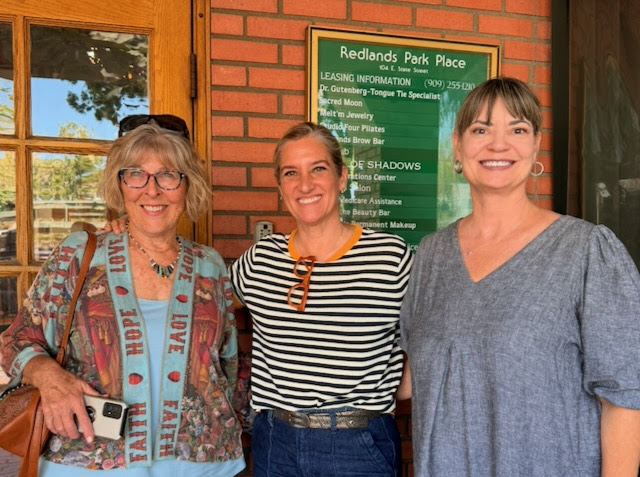
A good friend and colleague Norma Dupertuis writes a monthly newsletter with informative articles about senior living. She is a special lady and has a talent for writing. Her articles are interesting reads, as well as informative. We encourage you to subscribe to her newsletter at www.hellogoodwell.com
This past month’s newsletter featured an article on Who Needs a Care Manager. It provided a good outside perspective on the world of Care Management.
We encourage you to subscribe to her newsletter at www.hellogoodwell.com
Those closest to us are often the least able to see us objectively.
I used to think care managers were for families in crisis. The kinds of situations where everything seems to unravel at once. Mom has fallen. Dad has dementia. The siblings live in three different states and can’t agree on anything. Someone has to coordinate the doctors, the medications, the caregivers, the insurance—all the moving pieces that multiply the moment things go wrong.
And that’s part of it. But it isn’t the part that changed my mind.
My parents are 88 and 91 and doing remarkably well. I live ten minutes away. I’m deeply involved in their lives, and I work in the aging space. If anyone didn’t need a care manager, I thought, surely it would be me.
So I asked Carolyn what she’d tell someone like me. She didn’t hesitate. “You’re looking at your parents from inside the house. We come from outside the house and look in. We’re not the family — we’ll probably see things you’re not seeing.”
I haven’t stopped thinking about that sentence.
Lisa put it another way. She said it’s like coming home after a week away and smelling your own house for the first time — a smell that was there the whole time, but you’d stopped noticing it, because you live in it every day. Every home has one. You only smell it fresh when you’ve been gone.
That’s what a family loses when they’re the ones inside the situation.
Changes happen slowly. You adapt. You compensate. The slippage doesn’t register as slippage because you’re watching it every single day.
And there’s something else. Parents don’t always tell their adult children everything. Sometimes they don’t want to worry them. Sometimes they’re afraid that admitting a fall, a memory lapse, or increasing difficulty might set in motion conversations about giving up the home they love or the independence they’ve fought to keep.Someone coming in from outside, with decades of experience, notices what a devoted, attentive family simply can’t. Not because they’re not paying attention. Because they’re too close.Carolyn and Lisa have each spent more than thirty years in this work. Carolyn came up through nursing and hospice, and it was there — watching patients whose real needs fell outside what Medicare would ever reimburse — that she founded Parent Care Management Services in 1992. Over the decades she’s built it into a team of nurses, social workers, and gerontologists, and earned her own certification through the National Academy of Certified Care Managers along the way. Lisa spent years as a medical social worker with the Visiting Nurse Association, sitting with patients and families through end-of-life decisions, then moved into a congressional district office — six years untangling Medicare, Social Security, and the VA on behalf of constituents who had no idea where to start, eventually training and supervising caseworkers across two offices.
Between a nurse who built a company around what the medical system wouldn’t cover and a social worker who learned the federal bureaucracy from the inside, the two of them have seen almost everything. Yet what struck me most wasn’t their expertise in any single area — it was how often their work comes down to a simple, humbling truth. Clients don’t know what they don’t know.
A family calls and says, “I need a caregiver.” Carolyn’s first question is always, “Why do you think you need a caregiver?” Because usually there’s a longer story underneath it — one the family doesn’t yet have the language or the experience to see clearly. Sometimes what looks like a caregiving problem is actually a legal problem, or a financial one, or a family in disagreement about what Mom would even want.
That’s the real service. Not doing something a family couldn’t physically do themselves, but seeing what the family, by virtue of being the family, cannot.
Neither Carolyn nor Lisa described their work as taking over. They talked instead about partnership. A family might keep handling the doctor’s appointments and the medications. The care manager steps in to coordinate caregivers, mediate a disagreement between siblings, sort out a Medicare appeal, or evaluate whether a senior living community is actually what it claims to be. The role expands or shrinks depending on what’s needed. Sometimes it’s a single consultation. Sometimes it’s ongoing management for years. As Carolyn put it, “We solve the problems of aging adults and their families” — and every family’s problem looks different.
One thing that surprised me was how accessible those first conversations are. Parent Care Management Services offers a complimentary 30-minute consultation, followed—if it’s appropriate—by a more in-depth assessment for $250. Think of it as a comprehensive conversation rather than a commitment. Every family’s situation is different, and that assessment helps identify what challenges exist, what may be coming next, and where a care manager can be most helpful.
From there, families decide what they need. Some hire Parent Care Management Services to coordinate every aspect of care. Others simply ask for guidance on a particular issue—a difficult family conversation, a care plan, a move to senior living, or help navigating the healthcare system. As Carolyn told me, “I can give you information in an hour that’ll give you some things to go out and do.”
Another part of their work rarely gets talked about: protecting the caregiver.
Carolyn and Lisa don’t just evaluate the older adult, they evaluate the entire family system. Sometimes the person most at risk isn’t Mom or Dad. It’s the spouse who’s exhausted, or the adult child trying to juggle work, children, and round-the-clock caregiving.
They shared the story of a mother who had cared for her son with profound disabilities every day since birth for sixteen years. She couldn’t imagine anyone else doing it. Their question to her was simple: “What happens if something happens to you?”
Sometimes preserving the caregiver is one of the most important forms of caring for the person receiving care.
I asked whether this is only for families who can afford to hand everything off. It’s a fair question, and one I hear often in my own work. Carolyn’s answer was practical: it’s rarely about affording the service so much as understanding the cost of not having it. She told me about a family that decided not to continue working with her because they wanted to vet board and care homes themselves. They picked one, paid a community fee, and moved their father in — only to discover within a few weeks that the home couldn’t actually provide the overnight supervision he needed. They were back at square one, having spent thousands finding that out the hard way. “You can’t know what you don’t know how to look for,” she said. Sometimes the more expensive path is the one that looks free.
One of the things that stayed with me most after our conversation wasn’t a service description at all. It was something Lisa said about her years in that congressional office, watching policy debates that never seemed to move anyone: “Policy doesn’t change people. Stories change people’s minds.” She said it almost in passing, but it’s the reason this piece isn’t a list of what care managers do. Lists don’t change how anyone thinks about their own family. A story might.
So here’s mine: I sat down across from two women who’ve spent a combined sixty-plus years learning to see what the rest of us, standing too close, cannot. I left our meeting and later that evening stopped in to see my parents. And for the first time I found myself wondering what an outside pair of eyes might notice that I haven’t.
FAQ: Do I Really Need a Care Manager?
Many people assume a care manager is someone you call only if you have a highly complex case, or after a crisis—a hospitalization, a fall, or a dementia diagnosis.
In reality, some of the greatest value a care manager provides comes before a crisis occurs.
You might benefit from a care manager if:
- You live far from an aging parent and need someone local to assess situations, coordinate care, and be your eyes and ears.
- Family members don’t agree on what the best plan is. A care manager provides an experienced, objective perspective and can help families work toward a shared path forward.
- Healthcare has become overwhelming. Multiple physicians, medications, appointments, insurance questions, and hospital discharges can quickly become difficult to manage without someone coordinating the bigger picture.
- You’re managing several moving pieces at once, such as caregivers, home health, hospice, transportation, or a transition to senior living.
- Things seem “mostly fine,” but something feels different. Sometimes the changes are subtle. An experienced care manager can often recognize early signs that family members simply don’t see because they’re living inside the situation every day.